Tampilkan postingan dengan label Philosophy. Tampilkan semua postingan

Kamis, 24 November 2011

Happy Thanksgiving


Thanksgiving is the day that kicks off the holiday season.  A historically unifying event, Thanksgiving brings together Christians and non-Christians alike to celebrate America and give thanks for what we have.  
Thanksgiving also reignites the frustrations Christians experience during the holiday season.  We cannot say Merry Christmas because it is intolerant and offensive.  Instead, we are relegated to say, “Happy Holidays”, a phrase so vague and uninspiring that it leaves us feeling hallow.  But Thanksgiving brings us together.  We can say “Happy Thanksgiving” to everyone, but shouldn’t the politically correct among us be outraged this seemingly harmless expression?  Along with the creation of America came the decimation of an entire race of indigenous people.  The Native Americans certainly weren’t thankful for being told how to live.  Despite the morally questionable historical roots surrounding this popular holiday of Thanksgiving, it is nevertheless a chance to be grateful.  If for no other reason, giving thanks helps us lead a life of Christian virtue.  Our gratitude level is inversely proportional to our level of greed.  Gratefulness magnifies what we have while ingratitude magnified what we lack.      
In his book The City of God, St. Augustine explains that the philosophers have different opinions on what constitutes the good life.  Plato and his followers advocate contemplation and reflection as ways to add meaning to our lives.  Aristotle promotes the view that contemplation and action are necessary to live well.  
For college students, Thanksgiving is an opportunity to reflect.  Thoughtful reflection is good for everyone, and no human life should be without leisure.  Every professional should strive to have a mixture of productivity and rest.  One reason we need this leisure is to appreciate and be grateful for what we have been given.  Thanksgiving is a time we can celebrate relationships with family and friends.  Along with gratitude comes the call for charity.  Several years ago, my father and I went down to the Salvation Army food kitchen and served Thanksgiving dinner to the poorest among us.  I will never forget this experience.  Moreover, it is a time for us to express gratitude so we can further figure out who we are.      

Jumat, 18 November 2011

Pay It Forward

https://blogger.googleusercontent.com/img/b/R29vZ2xl/AVvXsEgYhwgGMtBUM8HeLzUwEY33VsRpZiDGembPyda7XZq7vYXhOuHAqKWhCYZW1athiZZiM1BZT8lwUltRMUXsYquq-_gVh30mUh3-EXz3G2hOig3kidfnnqSkRBDtGYEwZ2LOZfZBRPilNXM/s1600/pay_it_forward-713562.jpg


If you have never seen the film Pay It Forward, it’s worth your time to watch.  Based on the best-selling novel of the same name by Catherine Ryan Hyde, the film received mostly negative reviews from film critics for being emotionally manipulative and a sales pitch for the Pay It Forward Movement.  Despite the unfavorable reception of the film, the concept of ‘pay it forward’ is a brilliant one that outlines how an ordinary person like you or me can make a positive difference in this world. 

Paying It Forward is a boundless commitment to do good deeds without expecting anything in return.  If someone does a nice thing for you, you “pay it forward” by performing an act of kindness for someone else.  If the person you helped asked how to pay you back, simply tell them to “pay it forward”.

Although paying it forward is a straightforward concept, here are a few tips to get you headed in the right direction.

Always Look For Opportunities To Help Someone 
This mission can be difficult because we live in an era of precise scheduling and overcommitment.  Much of our time is occupied with work, school, shopping, and everything else.  Of course, there will always be small opportunities to help an elderly neighbor carry out the trash, or picking up the tab for a friend’s lunch.  However, if you want to make a bigger impact, budget time into your busy schedule for community service.  Make a regular habit out of searching for chances to make other’s lives better.

Don’t Expect Much In Return 
Paying it forward does not involve any compensation other than the feeling that you performed an act of kindness for a fellow human being.  It’s about helping make the world a friendlier place.  To be selfless means to get nothing in return.  I'm not sure this pure altruism is possible.  When you give money to a beggar, don’t you get happiness or satisfaction in return?  I think so, and if you helped another person while achieving happiness, you made the world a better place.   

Don’t Forget To Spread The Word
If, in the course of your random acts of kindness, someone wants to repay you, that is “pay it back”, explain to them the concept of “paying it forward”.  Tell them you’d like them to do something nice for three people in lieu of payment to you.  The idea is to exponentially increase the goodness in the world.

Senin, 14 November 2011

A Mother and A Father?

http://cdn.sheknows.com/articles/mother-and-father-drawing-with-child.jpgI have been blessed to have a loving mother and father, but in our society, many children only have one parent due to high divorce rates.  Some children have two parents of the same gender.  I started thinking recently about the role a parent plays in a child’s life--do children need both a mother and a father?  Is it unnatural to only have one parent or two parents of the same gender?

The nuclear family has only recently developed as commonplace in our species, so it is difficult to say whether or not is has been a success.  Human beings previously lived in small tribal groups with extended families. 

What happens when the parents are homosexual?  All children seek to emulate their parents, so it would be awfully peculiar for a heterosexual male to try to copy his homosexual parents.  Such an endeavor might bring about feelings of guilt and confusion.  Another problem arises when kids with homosexual parents are teased by bigoted kids and parents. 

I am of the opinion that a child needs adult guidance of one form or another in this world.  Here’s a fact- a baby would die without adults who care.  Babies are helpless and dependent upon adults for all their physical needs- food, shelter, water, and learning.  Once you look outside of basic needs and focus on ideas, the parents indoctrinate their children to some degree.  Children’s minds are like sponges that absorb ideas and then mimic them. 

I also think that a child, regardless of gender, should be influenced by both masculine and feminine qualities.  Why?  Both of these characteristics are evident in the world.  The child will be able to deal with these differences more effectively if they are present in the home. 

It should be mentioned that a child needs is love and compassion, and the source can come from anyone- homosexuals, divorced parents, and heterosexuals.  I am only arguing that the optimal situation includes both a mother and a father because masculine and feminine characteristics are present in the world.  I won’t doubt there are gay couples who are perfectly capable of loving and properly raising a child, but this is not the perfect scenario.

Jumat, 23 September 2011

Terms That Have Very Different Meanings In Philosophy and Non-Philosophy


Any field has its fair share of jargon, and philosophy is certainly no exception to the rule.  As an added bonus, some philosophical terms have entirely different meanings in our everyday world.  In its beginning stages, this post was supposed to be an earnest list of distinctions, but my effort was quickly demoted to a humorous, but somewhat serious conglomeration.

Personal Identity
Layman’s Definition- what you lose when you hit your head really hard or grow old
Philosopher’s Definition- the thing that makes me the same person I was yesterday

Logic
Layman’s Definition- Practice makes perfect, but no one is perfect, so why practice?
Philosopher’s Definition- a terribly complex system that uses upside As and reverse Es

Metaphysics
Layman’s Definition- that section in the bookstore containing tomes about cults, the apocalypse, psychics, and Tarot cards
Philosopher Definition- What Does Metaphysics Mean?

Descartes
Layman’s Definition- a mathematician
Philosopher’s Definition- a philosopher

Locke
Layman’s Definition- Some guy who wrote some books
Philosopher’s Definition- a dead modern philosopher who wrote about politics, language, and the mind

Continental
Layman’s Definition- the free breakfast you get at hotels that includes croissants, orange juice, and coffee
Philosopher’s Definition- a philosophical movement in the second half of the 20th Century that included German idealism, existentialism, phenomenology, critical theory, Marxism, and structuralism

Analytic Philosophy
Layman’s Definition- A redundancy if I’ve ever seen one.
Philosopher’s Definition- a generic term for a style of philosophy that emphasizes the use of scientific methods to develop and solve philosophical problems

Substance Abuse
Layman’s Definition- Overindulgence or dependency of alcohol or drugs
Philosophers Definition- Modern Philosophy

Sound
Layman’s Definition- what we hear with our ears
Philosopher’s Definition- what we call an argument that is valid and all of the premises are actually true

Sabtu, 17 September 2011

4 Common Misconceptions About The Roman Catholic Church

While the Roman Catholic Church is the oldest and largest within Christianity, and it also might be the least understood Church of any religion.  Led by the Pope, the Roman Catholic Church reports more than a billion members.  Perhaps the most distinctive doctrine of Catholicism is transubstantiation, which teaches the bread and wine are transformed into the body and blood of Jesus Christ.  However, there are other teachings of the Church that people seem to misunderstand...

Misconception: Catholics worship Mary, and therefore, commit idoltry.
The Catholic Church identifies three types of worship- latria, hyperdulia, and dulia.  Latria, the highest form of worship, can only be given to God, and if it is offered to anyone or anything else, it is considered to be a sin.  Hyperdulia is considered a different degree of reverence, and therefore, it can be given to the Blessed Virgin Mary.  In English, hyperdulia roughly translates into veneration.  Dulia is a special type of veneration given to saints and angels.  

Misconception: The Pope is infallible (incapable of making mistakes).
In fact, the Pope is only infallible under very specific circumstances. 
-The Pope must be making a decree on matters on faith or morals
-The declaration must be binding on the whole Church
-The Pope must be speaking with the full authority of Papacy, and not in a personal capacity.

Here’s an example from Pope Saint Pius V in the 16th Century at the Council of Trent:

“If anyone denies that in the sacrament of the most Holy Eucharist are contained truly, really and substantially the body and blood together with the soul and divinity of our Lord Jesus Christ, and consequently the whole Christ, but says He is in it only as a sign, or figure, or force, let him be anathema.”

“Let him be anathema” is a standard phrase that generally appears at the end of an infallible teaching.  It means, “Let him be cursed.”  A more recent example is when Pope John Paul II declared that women can not become priests.

Misconception: The Catholic Church is anti-science, anti-reason, and rejects evolution.

On the contrary, the Catholic Church has contributed a great deal to science and education.  Belgian priest Monsignor Georges Lemaitre was the first to propose the Big Bang Theory.  Unlike many of the Protestant and evangelical denominations of Christianity, the Catholic Church does not outright reject the theory of evolution.  In 2004, a Theological Commission supervised by Cardinal Ratzinger (now Pope Benedict XVI) issued the following statement--

“According to the widely accepted scientific account, the universe erupted 15 billion years ago in an explosion called the Big Bang and has been expanding and cooling ever since...Converging evidence from many studies in the physical and biological sciences furnishes mounting support for some theory of evolution to account for the development and diversification of life on earth, while controversy continues over the pace and mechanisms of evolution.”

Misconception: No Catholic priest can get married

While it is usually true that an ordained priest in the Roman Catholic Church can not be married, the Eastern Catholic Church does allow priests to marry, but a married priest cannot become a Bishop in the ladder case.  Not to be confused with the Orthodox Church, the Eastern Catholic Church still recognizes the Pope as the leader of the Church.  There are plenty of differences between the Roman Catholics and Eastern Catholics, but they believe nearly the same teachings.

Also, priests who convert from other religions are sometimes allowed to remain married.  The father of a high school friend of mine went through this process, and is now a married Roman Catholic priest.  

Sabtu, 20 Agustus 2011

Ethics Test


Also known as moral philosophy, the field of ethics addresses questions about good and evil, justice, virtues, and rights.  Ethics refers to well-founded standards of right and wrong that suggest what human beings ought to do.  
Although it can be easy to equate morality with feelings, being ethical is more than just following gut instincts.  In fact, feelings frequently deviate from what is ethical. 
 

In addition, ethics does not apply only to religious people, although many religions advocate high ethical standards.  Ethics applies to atheists, Christians, Buddhists, Muslims, and everyone else. 
 

Also, being ethical is not the same as following the law or doing what society accepts.  One need not look further than slavery before Civil War for an example of how a law can be unethical.  Nazi Germany is an example of an entire society that became ethically corrupt.   
 

Here’s a fun, but intriguing exercise to assess your ethical judgment.  Please note that this test contains misleading and exaggerated information, so use it with proper caution.  The purpose of this exercise is to teach people about ethics, the dangers of quick judgments and subjective criteria. 
 

Two ethical questions:
Question 1: If you knew a woman who was pregnant, who had eight children already, three who were deaf, two who were blind, one mentally retarded, and she had syphilis, would you recommend that she have an abortion?
Remember your honest answer and go to question 2.
 

Question 2: It is time to elect the world leader, and yours is the deciding vote. Here are the facts about the three leading candidates:
 

Candidate A: He associates with crooked politicians, and consults with astrologers. He's had two mistresses. He also chain smokes and drinks up to ten Martinis a day.
 

Candidate B: He was ejected from office twice, sleeps until noon, used opium in college and drinks a large amounts of whisky every evening.
 

Candidate C: He is a decorated war hero. He's a vegetarian, doesn't smoke, drinks an occasional beer and hasn't had any extra-marital affairs.
Which of these candidates would be your choice? Decide, then see the answer below.
 

Candidate A is Franklin D Roosevelt, Candidate B is Winston Churchill, and Candidate C is Adolph Hitler.
 

And by the way the answer to the abortion question... If you said yes, you just killed Beethoven.
 

Although the historical accuracy of this test can be questioned, the points made are still valid--we often make ethical judgments based on what society has told us.  In addition, we all tend to make snap decisions in assessing whether something is right or wrong without having complete information.

Kamis, 21 Juli 2011

What Is A Renaissance Man?


As some of you astute readers have probably noticed, I included the term “Renaissance Man” in the URL of this blog.  I did this for a reason, but I am not sure I have ever clearly explained my thoughts behind this decision.  I believe we live in an era of uber-specialization, a time when a individual can be an expert in one part of the digestive system, but have no idea what happens in international affairs.  
I strongly disagree with hyper-specialization, but I also recognize our competitive world in one in which you must know alot about a little to be successful.  University degrees effectively narrow a student’s area of expertise.  Even more disheartening, promising young athletes are encouraged to “go Pro” instead of going to college.  Sadly, the notion of a well-rounded Renaissance Man (or Woman) is becoming a thing of the past.
A Renaissance man or woman is a person skilled in many disciplines.  They may speak several languages and have a passion for philosophy, science, and religious teachings.  Typically, a Renaissance individual dedicates time and effort to physical activity in addition to intellectual pursuits.  Aristotle defines it much more eloquently than myself:
“Every systematic science, the humblest and the noblest alike, seems to admit of two distinct kinds of proficiency; one of which may be properly called scientific knowledge of the subject, while the other is a kind of educational acquaintance with it. For an educated man should be able to form a fair off-hand judgment as to the goodness or badness of the method used by a professor in his exposition. To be educated is in fact to be able to do this; and even the man of universal education we deem to be such in virtue of his having this ability. It will, however, of course, be understood that we only ascribe universal education to one who in his own individual person is thus critical in all or nearly all branches of knowledge, and not to one who has a like ability merely in some special subject. For it is possible for a man to have this competence in some one branch of knowledge without having it in all.”
Scientific knowledge is the knowledge possessed by a specialist in a particular field.  This type of knowledge is more detailed than “educational acquaintance”, which is what an individual has if s/he has been educated in the subject.  
On Joe’s Musings, I have made a sincere effort to write in detail about a wide variety of topics.  If you divert your attention to the right side of this page, you can see the labels I have applied to individual posts.  I work hard to deliver fact and opinion on a range of issues that interest me.  That brings me to my main point- why being a Renaissance individual is important.  Because knowledge in every field has proliferated extensively since the Renaissance era, it is impossible to be an expert in everything.  Nevertheless, you can still master one field, and be competent in many other areas.    
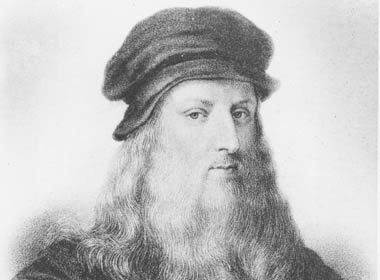
There have been several ideal Renaissance men in the annals of history, but the one that really distinguished himself from the pack was Leonardo da Vinci.  Born in Italy, da Vinci was a painter, sculptor, architect, musician, scientist, mathematician, engineer, inventor, anatomist, geologist, writer, botanist, and cartographer.  Today, the best example of a modern day Renaissance Man is none other than Henry Rollins.  Originally hailing from Washington D.C., Rollins was the lead singer of the seminal hardcore punk bank Black Flag in the 1980s.  Since then, he has never stopped expanding his horizons.  Henry is a writer, publisher, radio DJ, actor, TV show host, activist, narrator, and speaker.  


I never liked the phrase, “Jack of all trades, master of none” because it ignores the possibility of getting really good at a discipline or skill without being an expert.  Renaissance men and women are not generally not the world’s foremost experts on topics, but they are more proficient and competent than 99% of the general population in a given subject.  At some point, a person who seeking a broad knowledge base will take their studies up to the point of diminishing returns.
Learning about a wide spectrum of things not only improves your understanding of the world, it also makes you a more confident, assertive individual.  The specialist is generally constrained to one subject while the generalist can build empathy and appreciate more endeavors.  In addition, the Renaissance man receives more of what life has to offer. 

The true human being should be too complex to categorize.  Don’t limit your human experience by specializing in one field at the expense of other pursuits.  Be a Renaissance individual.    

Selasa, 19 Juli 2011

Bruce Lee- Thoughts, Video, and Pictures


Even though Bruce Lee passed nearly 40 years ago, his legacy has lived on.  One thing I find fascinating is the way people admire the physique of a man who stood five feet, seven inches and weighed 135 pounds.  In Western society, our definition of strong is a bulked up, 300 pound linebacker whose bench press exceeds 300 pounds.  Yet, martial artists and bodybuilders alike respect Lee’s physical dexterity, power, and speed, as well as the way he revolutionized unarmed combat.  
By American guidelines, Bruce was not a physically imposing man, but he was chiseled and in excellent shape.  Lee’s shape was tight, compact, and defined even when he was resting.  As evidenced by the fact he never entered a body building competition, his muscles were built for function, not glamour.  Bruce trained first and foremost for speed and strength which could be converted into power.  He worked long and hard to diligently mold his body into superb physical condition.  Using largely unknown training techniques, he developed a lethal arsenal comprised of lightening-quick reflexes, astounding flexibility, and a captivating grace.  


Power was the essence of Lee’s strength.  Although his body weighed only 135 pounds, he could kick a 300-pound punching bag into the ceiling.  Through intense study into human physiology and kinesiology, he was able to turn ineffective exercises into useful ones.  All his workouts were designed to get specific results.  He believed each day brought with it the opportunity to improve ourselves physically and mentally.  I have a deep admiration for a man who wanted to learn as much about the mind and the body as possible.


The late Stirling Silliphant (one of Lee’s students) captured Lee’s attitude towards strength and training as well as anyone:
“Bruce had me up to three miles a day, really at a good pace.  We’d run the three miles in 21 or 22 minutes.  Just under 8 minutes a mile.  So this morning, he said to me, “We’re going to go five.”  I said, “Bruce, I can’t go five.  I’m a helluva lot older than you are, and I can’t do five.”  He said, “When we get to three, we’ll shift gears and it’s only two more and you’ll do it.”  I said, “Okay, hell, I’ll go for it.”  So we get to three, we go into the fourth mile and I’m okay for three or four minutes, and then I really begin to give out.  I’m tired, my heart’s pounding, I can’t go any more and so I say to him, “Bruce if I run anymore,”-and we’re still running-”if I run any more I’m liable to have a heart attack and die.”  He said, “Then die.”  It made me so mad that I went the full five miles.  Afterward I went to the shower and then I wanted to talk to him about it.  I said, “Why did you say that?”  He said, “Because you might as well be dead.  Seriously, if you always put limits on what you can do, physical or anything else, it’ll spread over into the rest of your life.  It’ll spread into your work, into your morality, into your entire being.  There are no limits.  There are plateaus, but you must not stay there, you must go beyond them.  If it kills you, it kills you.  A man must constantly exceed his level.”
“There are no limits” is a central principle in Lee’s self-created art and philosophy jeet kune do.  In his logo, he placed Chinese characters that read, “Using no way as way, Having no limitation as limitation.”  In a letter written, Lee wrote, “Low aim is the worst aim a man has”.  


Senin, 18 Juli 2011

Guest Post: Don't Take Away Someone Else's Rights!

Today's post was written by Patrick Komlofske. Pat is proud to be a devout Catholic, and the most selfless person I know. He is forever giving his time and knowledge to put a smile on other's faces.  You can learn about his recording business, JMJ Communications, here.


Earlier this week I read a Facebook post stating the following:

Don't like gay marriages?  Don't get one..
Don't like cigarettes ?  Don't smoke them..
Don't like abortions?  Don't get one..
Don't like sex?  Don't have it..
Don't like drugs?  Don't do them..
Don't like porn?  Don't watch it..
Don't like alcohol?  Don't drink it..
Don't like guns?  Don't buy one..
Don't…like your rights taken away??? Don't take away someone else's.
{re-post if you agree}

I've held back a reply because I wanted to think about it.  At first, I wanted to comment: Don't like your parents?  Don't listen to them..  Don't like authority?  Don't respect it.  I thought that I might forget about it, but for several days I kept thinking about how disturbing some of this is.  Then I thought,  "Why am I so closed minded?"

I am an individual that truly loves our Lord.  As the southern bible belt would say; "I accept Jesus as my personal Lord and Savior".  For the last 20 years I have gained much education from studying beliefs of other denominations and that of my own Roman Catholic faith.  Since 1995, I have owned a recording business where I go to conferences, record their talks, then mass produce them on the spot for others to share.  While I am more informed than many, I am still no expert.  Each event I learn some very profound lessons, and meet many other people who love the Lord as much as I do.  So from that point of view, I thought the words above are words slamming the same morals that most religions try to instill in others.

After some prayer about this, and some objective thought, I am more at ease about it.  I don't see it as a slam on religion because the Church does not write laws, nor does it enforce them.  Every denomination simply educates people on what is right and wrong.  Yes, some ministers will become vigilantes, and try to take the law into his own hands, but that is the exception and not the norm.  It's our political lawmakers who write laws, and who have a means of enforcing the rights we all have.  Thus, the objective side of me says; So since I am not politically correct, and have a more open mind....  Maybe we should change some of our laws.

Don't like drugs and alcohol...  Why not.  People strung out on drugs and too much alcohol have a change in behavior.  They do stupid stuff, and sometimes it adds great humor to our day.  The good part when they are too strung out they don't remember anything.  Don't like them in your face?  Beat the crap out of them..  (we got rights too).  Sure they get behind the wheel of a car, and bad things happen.  That's why I have insurance.  I am ready for a newer car anyway.

Don't like Sex and Porn...  It's only the churches that say don't do it.  Maybe they grab their reasoning from flim-flam, certainly whatever credible basis they use has no reasoning.  It's kind of weird that most denominations (Christian and non Christian) find this to lead to trouble.  What's funny is society wants to smack the Church for all it does.  But again, the Church only informs what is right and wrong.  It does not set or enforce law.  So what's the harm with it, it hurts no one, correct?  Maybe all the people (married and unmarried) with hurt feelings when their partner interacts with another need to learn to chill out and quit being so closed minded.

Don't like abortions?...  People want to be able to choose for themselves.  Perhaps rights should be extended for parents to have this choice for one additional trimester - the fourth trimester.  Maybe after the blob of tissue has come from the womb that people should be able to choose to keep it.  Perhaps it has Downs Syndrome or some other (birth) defect.  Maybe the fetus was black and both husband and wife were white (daddy just found out that mama likes the mail man too, but that's ok, no one should take that right away from her), and they just don't want to keep the child.  They should be able to perform the procedure on that blob of tissue.  Yea, I know some would see it different, but I see it this way.  You take a woman in labor.  Do a sonogram on her, snap some pictures of the tissue.  Then hours later, take that same tissue, wrap it up in a towel, put in a backpack for a few minutes, take another sonogram of the backpack, shoot the same series of pictures, then compare them.  The only difference will be the umbilical cord will be shorter, the rest of the tissue will look the same.  So if someone wants the choice to terminate a pregnancy so be it, if at a later time the only thing that changed in the delivery is time, then it should be their right to a forth trimester to try it out.  What can it hurt?

Don't like gay marriages?  What a quandary of mixed emotions.  This is a "sexual behavior".  Why in the world do our law makers want to rule on what people do in the bedroom.  You hear the church say "hate the sin, not the sinner".  The issue of same sex attraction is not necessary the sin, but what they do with this behavior that becomes sin.  But, people say we need to separate the church and state.  The same goes with separating sex from state.  Don't discriminate someone because of their orientation.  However, do gays need special rights and their own "hate-crime" laws?  As long as my rights and privileges are not taken away because of someone else's sex behavior.  If I get denied from a job offer because I don't fill their quota of x then my choices are not being met.  If people can tease or educate me because I am a Christian White Heterosexual Male, then I have the right to tease or educate non Christians, non whites, women, or non-Heterosexual people.

The list can go on and on.  Our country is full of people who want to make choices, and when they don't get their way, we claim their rights are taken away.  Teenagers are in a difficult time of their life.  Their minds are becoming brighter every day, and they long to becoming adults so they can make their own choices.  They rebel at the idea of adults, especially parents, making decisions for them.  It's like we shoot them down at every opportunity, yet we correct and guide them because we have learned the hard way, and want them to avoid the same mistakes we made.  But, parents need to rule and guide even if they come across as being not too bright.  I got to agree that some laws are just stupid.  In Kansas, you are obligated to wear a seat belt in a vehicle with 4 steel walls around you, but you are not required to wear a helmet if your riding a motorcycle.  The Church does a good job on getting proper morals out, and many people advocate to our law makers that they write laws to enforce these morals.  I guess we need to step back and be more objective about both sides of an issue.  Ask ourselves, who do people feel it should be right to remove restrictions to drug and alcohol use?  They have a good point of view if we would just consider it.  Then to, why do the law makers take these rights away - maybe their point of view has some merit.  Where do churches get the audacity to preach what they preach?  Could they have any credibility?  Could all their studies and research of the early church fathers mean anything at all? 

The above posting is a good philosophical debate students go round and round with in philosophy classes.  Unfortunately, the ones who get persecuted are the churches.  It's not just atheist against Christian.  It's not just Jew against Catholic, it goes from denomination to denomination, from agnostics to doctors of the faith.  God has given all of us a brilliant mind, and a freedom of will.  We all have good intentions.  Maybe we should just say rather than me being "Roman" Catholic, I should just say that I am "Patrick" Catholic, because my theology is comprised of phrases of "I think we should....", or "In MY opinion they should...", or "It is MY choice that government has to...".  King Henry did not like his bishop telling him he can't have multiple wives so he started his own religion.  Today there are more than 14,000 different protestant religions because all are in disagreement with their choices. In my own denomination, I for one, differentiate between "Roman" Catholic's and "American" Catholics.

For all the law makers and everyone reading this; I will close with an invitation to dig a little deeper on your beliefs.  Your opinion is good, but if it is only based on emotions, then dig a little deeper.  I know I don't have a strong foothold on faith and reason so I have to turn to someone with philosophers who have dedicated their life to study of this.  I know I don't understand the bible as it was written so I turn to a church who have experts in theology, who go back to the original languages of the text, and the tradition of the times.  People who studied all the early writings and traditions of the early church.  I surrender to the believe in the Catholic Church.  I am "Roman" Catholic because I yield and try to follow the teachings of the Holy Father on Faith and Morals, and stand with the authority of the bishops.  I feel they have exhausted studying the same principles I am looking for, so why try to reinvent the wheel?

Sabtu, 16 Juli 2011

Happy Birthday: Why Do We Celebrate Birthdays?


Why do we celebrate our birthdays?  Today is my birthday, and admittedly, I am excited to spend time with my family.  Each year, it feels special when my family takes a day to remember and appreciate what I mean to them.  We generally enjoy dinner at a restaurant of my choice.

Birthdays allow us to look at ourselves within the context of society.  Our laws have imposed age limits on nearly everything- 18 to vote, 21 to drink alcohol legally, 62 to receive Social Security benefits.  Some cultures show great respect to the elderly.  In my view, there is something wrong with this perception of age.  Our birthdays are meant to remember the day we came into this world.  If we view birthdays as a stepping stone to benefits, we lose sight of the significance surrounding the celebration of life.

Each birthday, we wonder if we have accomplished enough given our age, whether we are ahead or behind the predetermined pace.  Abraham Lincoln said it well--"And in the end, it's not the years in your life that count.  It's the life in your years."

When we are young, it becomes exciting to advance to the next year because, on the surface, age is associated with increased freedom.  When old, we wish the years would pass more slowly because we begin to realize we only have a limited amount of time on this planet.  In his short work "On Old Age", Seneca discusses our perceptions of time and existence.  As he grows older, Seneca realizes he had developed the habit of thinking about his life with regret at the loss of promise and opportunity.  Then, he reminds himself that young men ought to think of death just as much as old men.  Each day we wake up, he writes, is a gift.  Time takes on a different meaning when we view it as a gift rather than a resource.  

This birthday, I will attempt to view time as a gift, not a commodity.  Even though life can be difficult and hard to accept, the time we have is not something we own.  We were given life completely independent of our will.  Perhaps we can all respect life as an immeasurable, unquantified gift and protect it from the effort to transform it into a commodity.

Selasa, 05 Juli 2011

Ideological Turing Test

Alan Turing


Atheist blog Unequally Yoked has published an ideological Turing test to determine whether atheists can pretend to be Christians and vice versa.  The purpose of the test is to see how well the two groups understand each other. 
For those of you that don’t know, a Turing test is a exam to determine a machine’s ability to exhibit intelligent behavior.  A human judge engages in a natural language conversation with one human and one machine, each emulating human responses.  If the judge cannot reliably tell the machine from the human, the machine is said to have passed the test.  The test was first introduced by computer scientist and mathematician Alan Turing in a 1950 paper.  He opens the essay with the following quote- “I propose to consider the question, “Can machines think?”  
Can you see the connection between the Turing test and the Unequally Yoked version?  Atheists and Christians will answer both sets of questions, then a judge will try to determine who is a believer and who is not based on the responses to the questions.  Here are the questions...
For Christians...
-What’s your best reason for being a Christian?
-What evidence or experience (if any) would cause you to stop believing in God?
-Why do you believe Christianity has a stronger claim on the truth than other religions?  On what basis do you reject the truth claims of other traditions and denominations but accept your own?
-How do you read the Bible?  Do you study the history of its translations?  How do you decide which translations are the true Bible?  How does it guide you if you have a moral or theological dilemma?
For Atheists...
-What’s your best reasons for being an atheist?
-What evidence or experience (if any) would cause you to believe in God?  If you believed in some kind of God, what kind of evidence would be necessary to convince you to join a particular religion?
-When you have ethical and moral disputes with other people, what do you appeal to?  What metric do you use to examine your moral intuitions?
-Why is religion so persistent?  We have had political revolutions, artistic revolutions, an industrial revolution, and also religious reformations of several kinds, but religions endures.  Does this not suggest its basic truth?

Senin, 04 Juli 2011

Quotes on Freedom


In between fireworks and barbeques this Fourth of July weekend, I encourage you to consider these deeper thoughts on what freedom is.  On the surface, freedom is an easy concept to think about.  We have the freedom to go to the grocery store or walk around the block, but these simple actions don’t fully capture the depth of the essence of freedom.  This Independence Day, I want to share some of the deepest, thought-provoking quotes on freedom and independence I could find.  
“How unreasonable people are!  They never use the freedoms they have but demand those they do not have; they have freedom of thought-they demand freedom of speech”  Soren Kierkegaard
“It is the whole soul, in fact, that gives rise to the free decision, and the act will be so much the freer the more the dynamic series with which it is connected tends to be the fundamental self...But the moments at which we thus grasp ourselves are rare, and that is why we are rarely free.” Henri Bergson
“Between stimulus and response there is a space.  In that space is our power to choose our response.  In our response lies our growth and our freedom.” 
“The last of the human freedoms is to choose one’s attitudes.”
Viktor Frankl
“The only way to deal with an unfree world is to become so absolutely free that your very existence is an act of rebellion.” Albert Camus
“The word freedom has no meaning; there are and there can be no free beings...One can no more conceive of a being behaving without a motive than of one arm of a scales moving up and down without the action of a weight.” Denis Diderot
“What is then liberty?  To be born is at once to be born in the world and to the world.  The world is already constituted, but never completely.  Under the first rapport, we are solicited, under the second, we are open to an infinity of possibilities.  But this analysis is still abstract, because we exist under these two relations at once.  There is therefore never determinism and never absolute choice; I am never a thing and never naked consciousness.” Maurice Merleau Ponty
“the generic features of the human race, when rightly understood, do not restrict man’s freedom, and should not artificially be made to do so.  A man develops qualities and activities of his own, and the basis for these we can seek only in the man himself.  What is generic in him serves only as a medium in which to express his own individual being.” Rudolf Steiner
“Free will is an illusion.  People always choose the perceived path of greatest pleasure.” Scott Adams
“We must be the slave of laws if we want to be free.” Cicero

“While the State exists, there can be no freedom. When there is freedom, there will be no State.” Lenin
“Freedom is the right to do whatever the laws permit” Montesquieu

Selasa, 21 Juni 2011

How To Read Kant's Critique of Pure Reason


Back in the Fall of 2010, I took a modern philosophy course.  It was a 300 level class, and many of the philosophers we studied I had never read before.  My experience was going well until we started reading Immanuel Kant, the man who revolutionized philosophy in the modern period by creating a compatabilist view of empiricism (sensory experience is the ultimate source of all our knowledge and concepts) and rationalism (some knowledge is independent of experience).  I enjoyed reading the various views of Descartes, Hume, Locke, Leibniz, and Berkeley, and after some contemplation, I was able to understand the bizarre and mind-bending views of these philosophers.  However, when we started reading Immanuel Kant, my head nearly exploded.  I gave up quickly and relied on the interpretations of the instructor and my friends to get me through the course.  
Since then, I tried to tackle Kant’s work Critique of Pure Reason in small chunks.  It has been a slow-moving train, and getting past the pedantic organization of the text and the scholastic terminology has been very difficult.  SparkNotes has been friendly to me as well.  Here are my tips to get through Immanuel Kant’s most reputable work while minimizing pain and confusion.
Before reading Critique of Pure Reason, read the Prolegomena, a short book in which Kant explains what the Critique is meant to accomplish- to discover the limits and scope of what reason alone can determine without the help of the senses.  This book is a valuable starting place to understanding Kant’s epistemology and metaphysics.  Also, look up SparkNotes and Kant’s lecture notes on logic because they will both give you a better idea of how he thought philosophy should be done.  Understanding his “logical method” is a key to comprehending his works.  Choose your text carefully.  I would recommend finding the version closest to the original as possible because while abridgments are tempting, they do not take into account that Kant included every sentence for a reason.  
The introduction is absolutely vital to understanding the rest of the book.  In the introduction, he defines important terms- transcendental aesthetic, intuitions, sensibility, synthetic judgments, analytic judgment, a priori, and a posteriori.  Attempting to read the book without knowing these terms first is a fool’s errand.  (Attempting to read the book knowing these terms is an educated fool’s errand).
In addition to these specific steps, I would advise you treat Kant as you would any other philosopher.  For me, that means take notes, question what you read, and use supplementary resources to further your understanding of what Kant meant.  
Any philosophy can be intimidating, but Kant is on a different level of difficulty.  In addition to an extremely difficult subject matter (the nature of knowledge and the limits of reason), Kant uses terminology that is altogether foreign to the common man.  

Kamis, 16 Juni 2011

How To Become A Philosopher


It’s funny the reactions I get after I tell people I study philosophy at the University of Kansas.  Many times, people are interested and curious about why I chose to study business and philosophy.  They say things like, “That’s an interesting combination.  What made you decide to do that?”  One person called me a freak--not an unreasonable claim because the connections between business and philosophy are not immediately evident.

The thing about doing philosophy is that anyone with a questioning mind can do it.  There’s nothing special about me--I only have the strong desire to question and find the truth.  You can be just like Socrates without much training or background.  First, you must understand that regardless of what you have been told, there is no clearly defined way to do philosophy properly.  There’s no protocol, rulebook, or procedure an individual must follow.  It helps to eliminate prejudice, ignorance, and your own point of view when examining an philosophical question, but sometimes, your point of view, if supported with sound and valid arguments, can be vital to transforming you into a prolific philosopher.  A philosopher is a person that engages in critical thinking about some of the most perplexing issues that concern humanity.  You don’t need a formal degree or a title to be a philosopher.  Instead, a philosopher seeks to understand, learn from every experience, and analyzes everything around them.

Second, there is no clearly defined way to question, which adds to the beauty.  Sure, there are different schools of thought, but there are countless ways to begin and continue your inquiry.  If you decide to study philosophy at a university, you will be exposed to different famous thinkers and their opinions, but in order for you yourself to become a philosopher, you must think about these issues and decide for yourself whether you agree or disagree.  Be prepared to defend your opinions with reasons and seek the truth above all else.  You must be the source of your own philosophical investigation.  If you are very serious about pursuing structured studies in philosophy, consider minoring or majoring to get more exposure and perspectives on philosophical questions.  

Philosophers think about profound topics that rarely enter into everyday small talk- life, death, existence, meaning, knowledge, and reality to name a few.  Bertrand Russell said when a question has an absolute answer, it is no longer philosophical.  One of the most important questions a philosopher can ask him/her self is, “Why do I believe what I believe?”  Debate is a crucial element to accepting criticism about your own personal beliefs on these profound issues.  In addition to questioning and clarifying your own beliefs, multiple perspectives can help you reach more sound conclusions about these issues.  Never be afraid to ask, “Why?”      

Generally, I haven’t encountered many philosophers who also consider themselves believers in a God.  The lone girl brave enough to voice her belief in God in my modern philosophy class was harshly rebuked by other students.  Christian religions (and most world religions) presuppose the existence of God in all their teachings and doctrine, so when a philosopher questions the very existence of God, the entire body of religious teaching is at stake.  If the philosopher decides God does not exist, it becomes terribly difficult to believe in the other teachings of a religious organization because in that individual’s mind, there is no foundation on which to justify actions and behavior.  However, occasionally I’ll meet someone who has questioned their own religious beliefs, and as a result, their faith has grown stronger.  I argue that these people should also be considered philosophers because they have approached their faith with an open mind, and have not been afraid to question deeply held assumptions.