Minggu, 24 Juli 2011

Archives

The Federal Deficit and the Debt Ceiling

The deadline for the federal government to raise the debt ceiling is August 2.  If the ceiling on federal debt is not raised, the federal government will not be able to borrow money, but it still has enough revenue from the collection of federal taxes to pay parts of the debt.  If Congress decides not to raise the debt ceiling, the federal government will not be able to pay government salaries, Social Security, Medicare, Medicaid, or investor bonds in full.  

While it doesn’t seem prudent to allow the federal government to borrow more money, the consequences of not raising the debt ceiling could be catastrophic.  A sudden, 45% drop in government spending could shock the economy.  Ben Bernanke, the Federal Reserve Chairman, told the Senate it would be a “recovery-ending event”.  In 1917 when the United States entered World War I, Congress authorized the Treasury to issue long-term bonds to finance the war, but placed a limit on the amount of debt the government could incur.  That limit is known as the debt ceiling, and it has been raised repeatedly since then.  The limit currently stands at $14.3 trillion, which the government reached last May.  Through some loopholing, Secretary of the Treasury Timothy Geithner has been able to provide Congress with time to raise the ceiling.  He set the deadline on August 2.

President Obama and Speaker of the House John Bohner have crafted a deal in which federal spending would be cut by $3 trillion over the next decade and tax revenues increase by $1 trillion.  If the Democrats and Republicans can agree to increase tax revenues by one dollar for every three dollars in spending cuts, this is a good compromise.  Heavy spending cuts and lighter tax increases.

Because the United States is an aging country, the federal debt will continue to grow as transfer payments for healthcare increase dramatically.  Reducing the overall national debt seems like a pipe dream right now.  The first step is to reduce the deficit (yearly debt) to zero through economic growth and lower spending.  However, the government must be extremely careful not to overdo the taxes.  Businesses and people will have less disposable income if taxes are raised, which would likely decrease overall Gross Domestic Product (GDP).  

Sabtu, 23 Juli 2011

What is an IPO?- Upcoming IPOs


Outside of the business world, IPOs are probably confused with UFOs.  However, an initial public offering (IPO) is an important term for business professionals to  understand.  Put simply, an IPO is when a company issues common shares of stock to the public for the first time.  Companies “go public” to attract a wide pool of investors that provide capital for future growth or repayment of debt.  Unlike debt, shares of common stock are never required to be repaid to the investor.    
Once a company lists itself on a stock exchange, it then can issue additional shares of stock in a secondary offering.  The ability to raise capital quickly is often a company’s primary reason for being a publicly traded company.  Furthermore, a company can gain exposure and public image if it becomes publicly traded.  
Initial public offerings are not without drawbacks.  Companies will often incur significant legal, accounting, and marketing costs.  After a company goes public, it must disclose financial and business information to possible investors.  This same information is also available to competitors.   
Next week, a plethora of IPOs are expected to hit the market.  The IPO calendar is filled up to levels not seen since 2007: 10 IPOs are scheduled to trade with the first starting on July 27.  You might have heard of a few of the IPOs- coffee and donut chain Dunkin’ Brands Group Inc. and tea retailer Teavana Holdings are the two consumer names on the list.  Business software maker Tangoe Inc. and gourmet food distributor The Chef’s Warehouse Inc.  are two other companies expected to issue common stock for the first time.  Headphone maker Skullcandy Inc. will offer at least 8.3 million shares at an expected price rage of $17 to $19 per share.  Online real-estate company Zillow Inc. will sell 3.46 million shares at $16 to $18 apiece.  

Jumat, 22 Juli 2011

Management Potential Quiz


The following short quiz consists of 4 questions and tells whether you are qualified to be a "manager." The questions are not that difficult.
How do you put a giraffe into a refrigerator?
The correct answer is: Open the refrigerator, put in the giraffe and close the door.
This question tests whether you tend to do simple things in an overly complicated way.
How do you put an elephant into a refrigerator?
Wrong Answer : Open the refrigerator, put in the elephant and close the refrigerator.
Correct Answer : Open the refrigerator, take out the giraffe, put in the elephant and close the door.
This tests your ability to think through the repercussions of your actions.
The Lion King is hosting an animal conference, all the animals attend except one. Which animal does not attend?
Correct Answer: The Elephant. The Elephant is in the refrigerator.
This tests your memory. OK, even if you did not answer the first three questions correctly, you still have one more chance to show your abilities.
There is a river you must cross. But it is inhabited by crocodiles. How do you manage it?
Correct Answer: You swim across. All the Crocodiles are attending the Animal Meeting!
This tests whether you learn quickly from your mistakes.

According to Andersen Consulting World wide, around 90% of the professionals they tested got all questions wrong. But many pre-schoolers got several correct answers. Andersen Consulting says this conclusively disproves the theory that most management consultants have the brains of a four-year old.

Kamis, 21 Juli 2011

What Is A Renaissance Man?


As some of you astute readers have probably noticed, I included the term “Renaissance Man” in the URL of this blog.  I did this for a reason, but I am not sure I have ever clearly explained my thoughts behind this decision.  I believe we live in an era of uber-specialization, a time when a individual can be an expert in one part of the digestive system, but have no idea what happens in international affairs.  
I strongly disagree with hyper-specialization, but I also recognize our competitive world in one in which you must know alot about a little to be successful.  University degrees effectively narrow a student’s area of expertise.  Even more disheartening, promising young athletes are encouraged to “go Pro” instead of going to college.  Sadly, the notion of a well-rounded Renaissance Man (or Woman) is becoming a thing of the past.
A Renaissance man or woman is a person skilled in many disciplines.  They may speak several languages and have a passion for philosophy, science, and religious teachings.  Typically, a Renaissance individual dedicates time and effort to physical activity in addition to intellectual pursuits.  Aristotle defines it much more eloquently than myself:
“Every systematic science, the humblest and the noblest alike, seems to admit of two distinct kinds of proficiency; one of which may be properly called scientific knowledge of the subject, while the other is a kind of educational acquaintance with it. For an educated man should be able to form a fair off-hand judgment as to the goodness or badness of the method used by a professor in his exposition. To be educated is in fact to be able to do this; and even the man of universal education we deem to be such in virtue of his having this ability. It will, however, of course, be understood that we only ascribe universal education to one who in his own individual person is thus critical in all or nearly all branches of knowledge, and not to one who has a like ability merely in some special subject. For it is possible for a man to have this competence in some one branch of knowledge without having it in all.”
Scientific knowledge is the knowledge possessed by a specialist in a particular field.  This type of knowledge is more detailed than “educational acquaintance”, which is what an individual has if s/he has been educated in the subject.  
On Joe’s Musings, I have made a sincere effort to write in detail about a wide variety of topics.  If you divert your attention to the right side of this page, you can see the labels I have applied to individual posts.  I work hard to deliver fact and opinion on a range of issues that interest me.  That brings me to my main point- why being a Renaissance individual is important.  Because knowledge in every field has proliferated extensively since the Renaissance era, it is impossible to be an expert in everything.  Nevertheless, you can still master one field, and be competent in many other areas.    
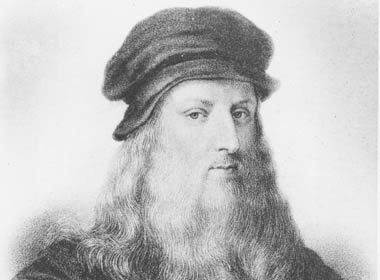
There have been several ideal Renaissance men in the annals of history, but the one that really distinguished himself from the pack was Leonardo da Vinci.  Born in Italy, da Vinci was a painter, sculptor, architect, musician, scientist, mathematician, engineer, inventor, anatomist, geologist, writer, botanist, and cartographer.  Today, the best example of a modern day Renaissance Man is none other than Henry Rollins.  Originally hailing from Washington D.C., Rollins was the lead singer of the seminal hardcore punk bank Black Flag in the 1980s.  Since then, he has never stopped expanding his horizons.  Henry is a writer, publisher, radio DJ, actor, TV show host, activist, narrator, and speaker.  


I never liked the phrase, “Jack of all trades, master of none” because it ignores the possibility of getting really good at a discipline or skill without being an expert.  Renaissance men and women are not generally not the world’s foremost experts on topics, but they are more proficient and competent than 99% of the general population in a given subject.  At some point, a person who seeking a broad knowledge base will take their studies up to the point of diminishing returns.
Learning about a wide spectrum of things not only improves your understanding of the world, it also makes you a more confident, assertive individual.  The specialist is generally constrained to one subject while the generalist can build empathy and appreciate more endeavors.  In addition, the Renaissance man receives more of what life has to offer. 

The true human being should be too complex to categorize.  Don’t limit your human experience by specializing in one field at the expense of other pursuits.  Be a Renaissance individual.    

Rabu, 20 Juli 2011

Anniversary of Bruce Lee's Passing


Bruce Lee was a martial arts instructor, philosopher, film director, and founder of the Jeet Kune Do (Way of the Intercepting Fist) school of martial arts.  The anniversary of his death is today, and I wanted to honor Bruce Lee as he has been a role model for me.  Even though he was adamant in his belief that he is not a teacher, he has greatly influenced the way I approach life.  Instead of celebrating his life with a biography, I believe the best way to honor Bruce Lee is to publish words from the man himself.    
“Love is like a friendship caught on fire.  In the beginning a flame, very pretty, often hot and fierce, but still only light and flickering.  As love grows older, our hearts mature and our love becomes as coals, deep-burning and unquenchable.”
“All fixed set patterns are incapable of adaptability or pliability.  The truth is outside of all fixed patterns.”
“If you always put a limit on everything you do, physical or anything else, it will spread into your work and into your life.  There are no limits.  There are only plateaus, and you must not stay there.  You must go beyond them.”
“As you think, so shall you become.”
“The key to immortality is first living a life worth remembering.”
“Ever since I was a child, I have had this instinctive urge for expansion and growth.  To me, the function and duty of a quality human being is the sincere and honest development of one’s potential.”
“I always learn something, and that is: to always be your self, express yourself, have faith in yourself.  Do not go out and look for a successful personality and duplicate him.”
“Empty your mind, be formless, shapeless- like water.  Now you put water into a cup, it becomes the cup, you put water into a bottle, it becomes the bottle, you put it in a teapot, it becomes the teapot.  Now water can flow or it can crash.  Be water, my friend.”
“Notice the stiffest tree is most easily cracked, while the bamboo or willow survives by bending with the wind.”
“Real living is living for others.”
“If you spend too much time thinking about a thing, you’ll never get it done.”
“Mistakes are always forgivable if one has the courage to admit them.”
“Man, the living creature, the creating individual, is always more important than any established style or system.”
“If you love life, don’t waste time, for time is what life is made up of.”
“Training is one of the most neglected phases of athletics.  Too much time is given to the development of skill and too little to the development of the individual for participation.  Jeet Kune Do ultimately is not a matter of petty techniques but of highly developed spirituality and physique.”
“It is not the daily increase but daily decrease.  Hack away at the unessential.”
“Use only that which works, and take it from any place you can find it.”
“All types of knowledge ultimately lead to self-knowledge.”
“I have not invented a "new style," composite, modified or otherwise that is set within distinct form as apart from "this" method or "that" method. On the contrary, I hope to free my followers from clinging to styles, patterns, or molds. Remember that Jeet Kune Do is merely a name used, a mirror in which to see "ourselves". . . Jeet Kune Do is not an organized institution that one can be a member of. Either you understand or you don't, and that is that. There is no mystery about my style. My movements are simple, direct and non-classical. The extraordinary part of it lies in its simplicity. Every movement in Jeet Kune-Do is being so of itself. There is nothing artificial about it. I always believe that the easy way is the right way. Jeet Kune-Do is simply the direct expression of one's feelings with the minimum of movements and energy. The closer to the true way of Kung Fu, the less wastage of expression there is. Finally, a Jeet Kune Do man who says Jeet Kune Do is exclusively Jeet Kune Do is simply not with it. He is still hung up on his self-closing resistance, in this case anchored down to reactionary pattern, and naturally is still bound by another modified pattern and can move within its limits. He has not digested the simple fact that truth exists outside all molds; pattern and awareness is never exclusive. Again let me remind you Jeet Kune Do is just a name used, a boat to get one across, and once across it is to be discarded and not to be carried on one's back.”

Selasa, 19 Juli 2011

Bruce Lee- Thoughts, Video, and Pictures


Even though Bruce Lee passed nearly 40 years ago, his legacy has lived on.  One thing I find fascinating is the way people admire the physique of a man who stood five feet, seven inches and weighed 135 pounds.  In Western society, our definition of strong is a bulked up, 300 pound linebacker whose bench press exceeds 300 pounds.  Yet, martial artists and bodybuilders alike respect Lee’s physical dexterity, power, and speed, as well as the way he revolutionized unarmed combat.  
By American guidelines, Bruce was not a physically imposing man, but he was chiseled and in excellent shape.  Lee’s shape was tight, compact, and defined even when he was resting.  As evidenced by the fact he never entered a body building competition, his muscles were built for function, not glamour.  Bruce trained first and foremost for speed and strength which could be converted into power.  He worked long and hard to diligently mold his body into superb physical condition.  Using largely unknown training techniques, he developed a lethal arsenal comprised of lightening-quick reflexes, astounding flexibility, and a captivating grace.  


Power was the essence of Lee’s strength.  Although his body weighed only 135 pounds, he could kick a 300-pound punching bag into the ceiling.  Through intense study into human physiology and kinesiology, he was able to turn ineffective exercises into useful ones.  All his workouts were designed to get specific results.  He believed each day brought with it the opportunity to improve ourselves physically and mentally.  I have a deep admiration for a man who wanted to learn as much about the mind and the body as possible.


The late Stirling Silliphant (one of Lee’s students) captured Lee’s attitude towards strength and training as well as anyone:
“Bruce had me up to three miles a day, really at a good pace.  We’d run the three miles in 21 or 22 minutes.  Just under 8 minutes a mile.  So this morning, he said to me, “We’re going to go five.”  I said, “Bruce, I can’t go five.  I’m a helluva lot older than you are, and I can’t do five.”  He said, “When we get to three, we’ll shift gears and it’s only two more and you’ll do it.”  I said, “Okay, hell, I’ll go for it.”  So we get to three, we go into the fourth mile and I’m okay for three or four minutes, and then I really begin to give out.  I’m tired, my heart’s pounding, I can’t go any more and so I say to him, “Bruce if I run anymore,”-and we’re still running-”if I run any more I’m liable to have a heart attack and die.”  He said, “Then die.”  It made me so mad that I went the full five miles.  Afterward I went to the shower and then I wanted to talk to him about it.  I said, “Why did you say that?”  He said, “Because you might as well be dead.  Seriously, if you always put limits on what you can do, physical or anything else, it’ll spread over into the rest of your life.  It’ll spread into your work, into your morality, into your entire being.  There are no limits.  There are plateaus, but you must not stay there, you must go beyond them.  If it kills you, it kills you.  A man must constantly exceed his level.”
“There are no limits” is a central principle in Lee’s self-created art and philosophy jeet kune do.  In his logo, he placed Chinese characters that read, “Using no way as way, Having no limitation as limitation.”  In a letter written, Lee wrote, “Low aim is the worst aim a man has”.