Selasa, 14 Juni 2011

Mother Teresa's Short Story

When I pick up a person from the street, hungry, I give him
a plate of rice, a piece of bread. But a person who is shut out,
who feels unwanted, unloved, terrified, the person who has been
thrown out of society -- that spiritual poverty is much harder to
overcome. Those who are materially poor can be very wonderful people.
One evening we went out and we picked up four people from the street.
And one of them was in a most terrible condition. I told the Sisters:
“You take care of the other three; I will take care of the one who
looks worse.” So I did for her all that my love can do. I put her in bed,
and there was such a beautiful smile on her face. She took hold of my hand,
as she said one word only: “Thank you” -- and she died. I could not help
but examine my conscience before her. And I asked: "What would I say if I
were in her place?" And my answer was very simple. I would have tried to
draw a little attention to myself. I would have said: “I am hungry,
I am dying, I am cold, I am in pain, or something." But she gave me
much more -- she gave me her grateful love. And she died with a smile
on her face. Then there was the man we picked up from the drain, half-eaten
by worms and, after we had brought him to the home, he only said, “I have
lived like an animal in the street, but I am going to die as an angel,
loved and cared for.” Then, after we had removed all the worms from his body,
all he said, with a big smile, was: “Sister, I am going home to God” -- and
he died. It was so wonderful to see the greatness of that man who could
speak like that without blaming anybody, without comparing anything.
Like an angel -- this is the greatness of people who are spiritually
rich even when they are materially poor....

Senin, 13 Juni 2011

Pebbles, Rocks, Sand, and Beer


In March of 2009, I learned a valuable life lesson through a speech on a retreat.  It went something like this..
A student counselor stood at the front of the room with some items on the table in front of him.  When it came time for him to deliver his speech, he wordlessly picked up an empty two-liter bottle and proceeded to fill it with rocks.  He then asked the retreatants if the bottle was full.  We agreed it was.
So the counselor then dumped a box of pebbles into the bottle.  He shook the bottle lightly, and the pebbles rolled into the open cracks between the rocks.  He then asked us if the bottle was full.  We agreed it was. 
The counselor then picked up a small container of sand and poured it into the bottle.  The sand filled up the remaining empty spaces, and once again, the students agreed the bottle was full unanimously.  
Finally, the counselor cracked open a can of Bud Light and poured it into the bottle.  As expected, we resoundingly agreed the bottle was filled to capacity.
“Now,” said the counselor, “ I want you to recognize that this bottle represents your life.  The rocks are the important things- your family, your health, and your friends.  These things would still make your life full even if everything else was lost.”
“The pebbles are the other things that matter- your job, your house, your car, and other important material possessions.”
“The sand are the small things that don’t really matter and the beer are vices.”
“If you put the sand, pebbles, or beer into the bottle first, there is no room for the rocks.  The same goes for your life.  If you spend all your energy and time on the small stuff- material things and vices- you will never have room for the things that are truly important.  Pay attention to the things that are critical in your life.  Spend time with your parents.  Be there to talk your friend through a tough situation.  Take care of the rocks first- the things that really matter.  The rest is just pebbles, sand, and beer.”

Minggu, 12 Juni 2011

Egypt After The Revolution


Three months after the uprising in Egypt, former President Hosni Mubarak now faces charges for planning to kill unarmed protestors.  The Egyptian people want to see justice, but Mubarak’s trial is distracting the country from a bigger issue- the economy.  
Since Mubarak’s downfall, the Egyptian economy has contracted 7 percent and its foreign currency reserves are shrinking.  The International Monetary Fund projected that Egypt’s economic growth may slow to 1 percent this year, the lowest level since 1992.  
The new government has launched investigations into supposed corruption by Egypt’s business leaders, which has also contributed to the poor economic performance.  When you stifle entrepreneurship and venture capitalism, chances are economic growth will suffer as well.  In addition, civil unrest, lawlessness, and protests have frightened away foreign investors.
Mubarak’s replacements must find ways to lure back foreign investment and jump start the economy internally.  In the early 2000s, economic reform started with the lowering of corporate and personal taxes to allow people and businesses to have more disposable income.  The reduction and elimination of some tariffs encouraged foreign goods to flow into the Egyptian economy.  These two measures lowered Egypt’s debt and raised gross domestic product and per capita income.  These strategies hurt the lower socioeconomic classes.  Privatization of industry caused a loss of blue-collar jobs and benefits.  The gap between the richest and the poorest grew wider and wider at an surprising rate.  
These reforms were initiated by Mubarak’s regime, and the next wave of Egyptian leadership must distance itself from Mubarak.  Unfortunately, this tension might cause the new Egyptian leaders to more government-controlled economy, which will further damage the already injured system.    
The Egyptians must find ways to curb the crony capitalism of the late Mubarak years, but it also must continue to let the free markets work their magic.  Improved government oversight of political leader’s income and greater disclosure of government salaries are a start.  Regulations that restrict the use of state funds for personal gain must be put in place.  There should also be a push to increase trade with the European Union, the United States, and China.  
Economic and political stability is crucial in Egypt, a country that is arguably the hub of the Arab world.  The United States already realizes this, and we should consider forgiving the $3.6 billion amount Egypt owes us.  
Egypt can recover from the devastating blow its economy has taken in the past four months, but the buck stops with the new parliament and president, both of which will be elected in September of this year.  Egypt’s new government must continue the reforms from the Mubarak years, but it should make sure government officials are held accountable and forced to disclose information to the people.

Sabtu, 11 Juni 2011

Saturday Morning Humor

Greetings all,

I hope the beginning of your weekend is going well.  Because I am in a cheery mood, today's post will hopefully provide a bit of humor to brighten up your weekend.

First, a flock of geese that can surf.  In this case, several geese rode downstream and caught a standing wave in Glenwood Springs Whitewater Park on the Colorado River.


Second, in Sacramento, the Onion reports that California governor Jerry Brown announced that he would release all inmates who seemed as thought they were nice enough people.  In the baseball world, Phillies starting pitcher Cole Hamels is disgusted by opposing pitchers leaving trash on the mound.  

Film makers Casey Neistat shows why bike lanes aren't always safer than the streets.  


Jumat, 10 Juni 2011

Current Event Photos

A surprise tornado hits Springfield Massachusetts and causes the state's first tornado-related deaths in 16 years.

A Russian woman looks at vegetables through a shop window.  Russia banned all imports of fruits and vegetables from the European Union due to the E Coli outbreak. 

Rep. Weiner sits at a hearing.  He has been accused of improper sexual behavior on the Internet.

These tents in Tunisia are currently being used to house Libyan refugees.

Portugal's interim Prime Minister Jose Socrates responded to supporters in downtown Lisbon.

A woman walks with a bucket of mangos in India.  India is the world's largest exporter of mangos.

A plane is covered in volcanic ash in Chile.

In South Korea, police prepare for student protesters who were promised lower tuition costs.

NATO ordered air strikes hit Tripoli, the capital of Libya.  

A man walked on a water pipeline as he carried buckets of water in Karachi, Pakistan.

Two F-16 fighter jets perform a 'mirror flight' near Constanta, Romania.

A policeman wields a nightstick as a deterrent to protestors in Madrid, Spain. 

Two women rested in an airport in Buenos Aires.  Flights were canceled because Puyehue volcano in Chile erupted on Thursday.

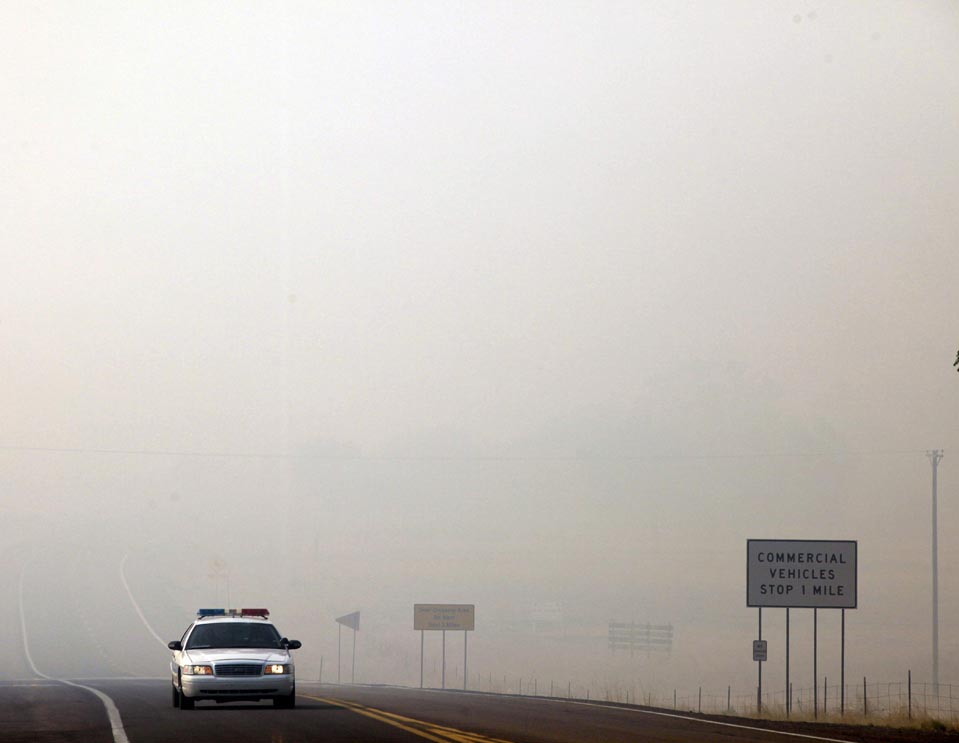
A police car traveled along highway 60 in Springerville, Arizona through smoke from the Wallow Fire.  The forest fire has removed people from their homes and threatens transmission lines that supply electricity as far east as Texas.

Kamis, 09 Juni 2011

Be A Philosopher!


Have you ever found yourself thinking of bizarre and existential topics that rarely come up in everyday conversation?  Do you wonder about the meaning of life, the source of knowledge, and reality often?  If so, you might be interested in philosophy.  Philosophy is thinking about some of the most perplexing problems that concern humanity, and it certainly isn’t easy to do, but if you have a questioning mind and strongly desire to clarify your beliefs, philosophy might be a good fit for you.  
If you just getting started, I recommend getting a foothold on the various periods in the history of philosophy- ancient, modern, midevil, contemporary, and analytic.  Plato, Aristotle, and Socrates are three ancient philosophers who can provide you with a strong background of what philosophy is all about.  Sophie’s World and Philosophy for Dummies are surprisingly two great starting places for absolute beginners.  Online forums, blogs, and introductory philosophy courses at universities are excellent way to expose yourself to more philosophical questions and issues.  
The purpose of introductory philosophy is not to get you to memorize large amounts of information.  It’s not crucially important that you know every aspect of Descartes Meditations for instance, but it is significant that you begin to think critically about positions and arguments.  Furthermore, philosophy is a field that has its hands in everything.  Therefore, if you become adept at thinking creatively and critically about perplexing issues, these skills will likely transfer into other aspects of your life.  
An important thing to understand about philosophical questions is that there are no right or wrong answers.  In fact, if an issue ever has an undisputed “right” answer, it is no longer philosophical.  However, some answers are better than others because they take into account reasons and evidence that contribute to the strength of the argument.  

Rabu, 08 Juni 2011

Everyone Is Capable of Kindness

In the days when an ice cream sundae cost much less, a 10 year old boy
entered a local parlor and sat at a table. A waitress put a glass
of water in front of him. "How much is an ice cream sundae?" he asked.
"Fifty cents," replied the waitress. The little boy pulled his hand out
of his pocket and studied the coins in it. "Well, how much is a plain dish
of ice cream?" he inquired. By now more people were waiting for a table
and the waitress was growing impatient. "Thirty-five cents," she brusquely
replied. The little boy again counted his coins. "I'll have the plain ice
cream," he said. The waitress brought the ice cream, put the bill on the
table and walked away. The boy finished the ice cream, paid the cashier,
and left. When the waitress came back, she began to cry as she wiped down
the table. There, placed neatly beside the empty dish, were two nickels
and five pennies. You see, he couldn't have the sundae, because he
had to have enough left to leave her a tip.